Role-based access planning
We structure permissions around departments, vendor access, and schedule constraints before device selection begins.
- Privilege mapping by user type
- Temporary and contractor access
- After-hours path design
Licensed & insured • South Florida service coverage
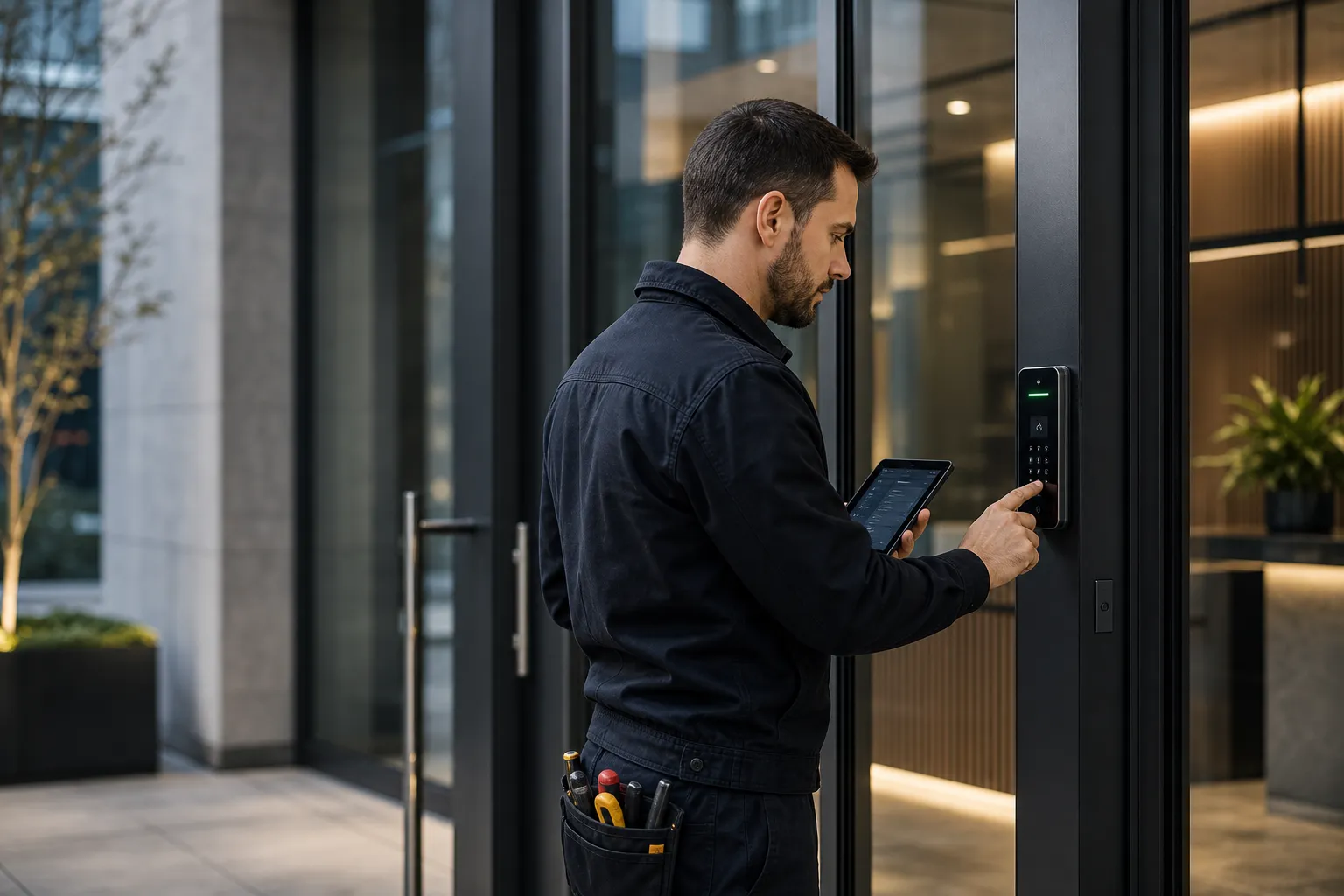
We design access-control systems around staffing, privilege tiers, after-hours usage, and occupied-building constraints so secure entry feels coordinated instead of improvised.
Biometrics, credentials, keypad systems, and hybrid secure-entry design for offices, industrial sites, campuses, and mixed-use properties.
We structure permissions around departments, vendor access, and schedule constraints before device selection begins.
Rollouts are phased to reduce interruption for tenants, staff, and visitors.
Documentation and device choices are made to support future expansion and easier maintenance.
Stakeholder review of user groups, failure risks, and secure-entry goals.
Recommended reader, lock, and controller approach aligned to each opening type.
Phased execution sequence for occupied or security-sensitive properties.
Documentation and service planning for ongoing credential or hardware changes.
“The rollout finally gave our operations team visibility without making tenants feel like they were in a fortress.”
Share the opening, the property type, and what you need to restore or improve.
Share the property, the service path, and the problem you need solved so we can route the request cleanly.
Access control works best when the property treats it like an operating system instead of a shopping list of devices. Our team starts by understanding who needs access, when they need it, and which openings create the most risk when control is loose.
A card reader or keypad only solves part of the problem. Most South Florida properties need a cleaner decision about credential groups, temporary access, after-hours cleanup, vendor routes, and how front-of-house traffic should move without slowing staff down. That early planning reduces rework and keeps expansion simpler when more doors come online.
We see the strongest results when access control is paired with supporting scope such as commercial master key planning or follow-up emergency commercial locksmith service for openings that are already failing. On multi-tenant or mixed-use sites, the right answer is often a phased rollout that starts with the highest-friction doors, then extends to shared entries, staff-only zones, and perimeter access points.
In South Florida, humid conditions, exterior doors, delivery traffic, cleaners, and vendor turnover can expose weak policies quickly. Owners want fewer unauthorized copies, clearer audit trails, and less confusion when schedules change. That is why the scope usually includes user-role mapping, cutover sequencing, and a practical service path for future adds, moves, and changes.
If you need to confirm local fit before choosing hardware, the Parkland locksmith coverage page is the best place to review nearby routing and request the next step. When the issue is broader than one opening, we can also turn this service into a property-wide audit plan.
Some projects are straightforward, but others need a wider look at key hierarchy, user movement, and rollout timing before scope is obvious.
Hierarchical key systems for campuses, offices, mixed-use buildings, and secure properties that need cleaner control over physical access.
Fast-response commercial locksmith service for storefront lockouts, broken cylinders, damaged entry hardware, and urgent secure-entry failures.
Use the Parkland page to confirm ZIP-code fit, nearby communities, and the cleanest next step for local support.
Owners dealing with precision engineered access control systems nearby usually want proof that the company serves the same communities, understands the property mix, and can connect emergency work, audits, and follow-up service without handing the job off.
Estate-grade locksmithing, gate service, secure-entry audits, and discreet perimeter upgrades for Parkland and nearby South Florida communities.
Rapid-response estate and perimeter service across Parkland and nearby gated communities.
Coconut Creek, Deerfield Beach, Lighthouse Point, West Boca
Access control questions usually start with turnover, visitor flow, and after-hours risk. These answers focus on planning, rollout fit, and how a South Florida property can move from scattered hardware decisions into a system that is easier to manage.
Often yes. Many successful deployments use a hybrid plan that phases digital control where it adds the most operational value first.
Yes. The operating model matters more than size alone, and we tailor scope accordingly.
We plan around occupancy, time windows, and permission migration so each cutover is controlled and documented.
Yes. Many South Florida projects begin with the highest-friction entries, then expand in later phases once the policy and hardware standard are working well.
Yes. A strong system improves visibility into who should have access, how credentials are issued, and what should happen when staffing changes quickly.
If this issue is part of a larger pattern across the property, the audit path usually reveals the best upgrade sequence.