Built around operations, not hardware catalogs
We start with access roles, turnover risk, and occupancy constraints before selecting devices.
- Department and tenant privilege mapping
- Vendor and after-hours protocols
- Audit-friendly change control
Licensed & insured • South Florida service coverage
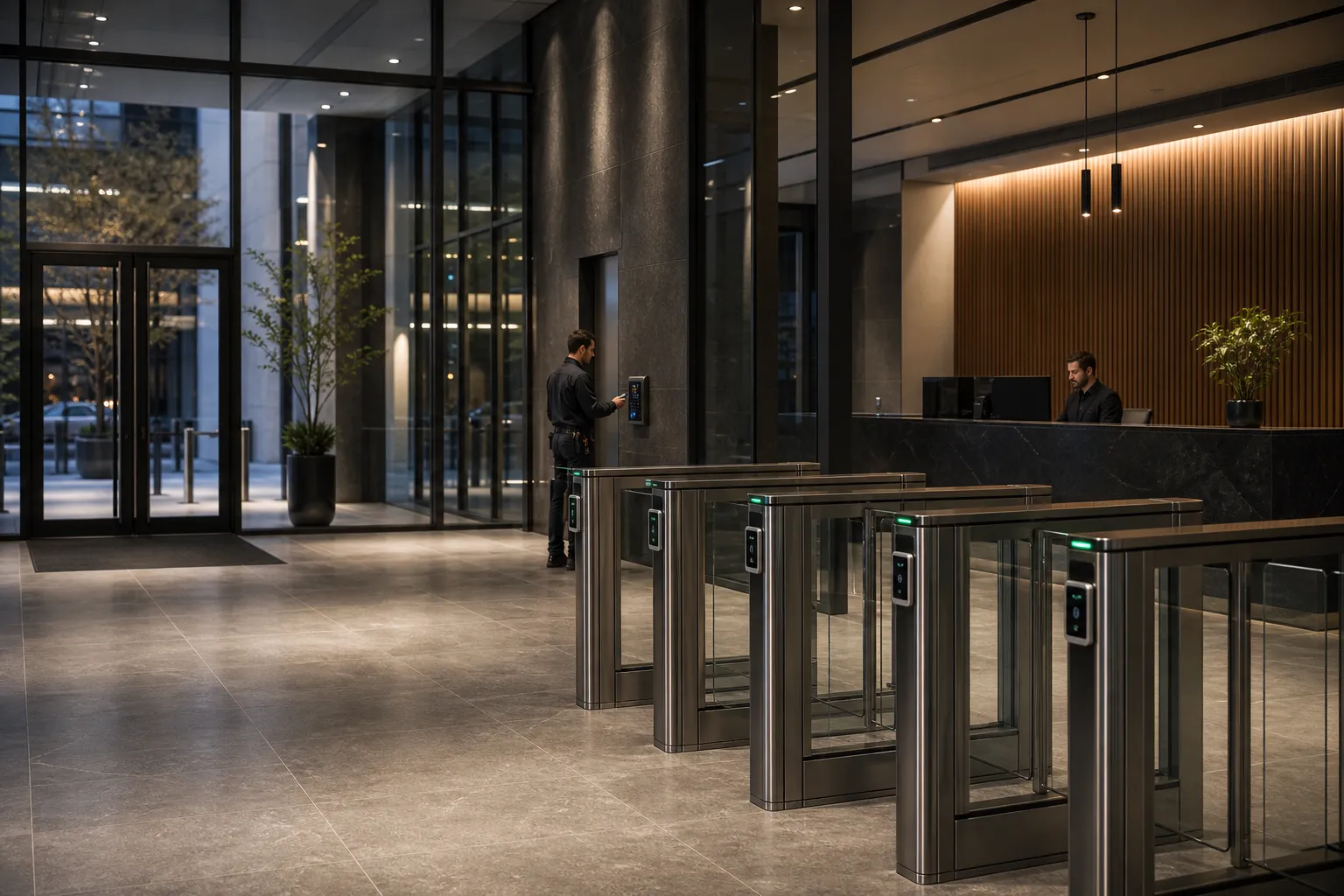
We engineer secure-entry systems around movement, staffing, vendor access, and after-hours protection so operators can scale without losing control of keys, credentials, or perimeter visibility.
Rollout patterns sized for campuses, multi-tenant suites, and distributed teams.
Scope review and initial recommendations within one business day for scoped commercial inquiries.
Mechanical, digital, and hybrid secure-entry strategies.
Rollout patterns sized for campuses, multi-tenant suites, and distributed teams.
Scope review and initial recommendations within one business day for scoped commercial inquiries.
Mechanical, digital, and hybrid secure-entry strategies.
Access control, enterprise locksmithing, master key planning, and secure-entry infrastructure for offices, campuses, mixed-use sites, and portfolio operators.
We start with access roles, turnover risk, and occupancy constraints before selecting devices.
Our plans prioritize staged execution so properties stay usable while security improves.
Systems are structured to scale with new doors, suites, and staff instead of restarting every time complexity grows.
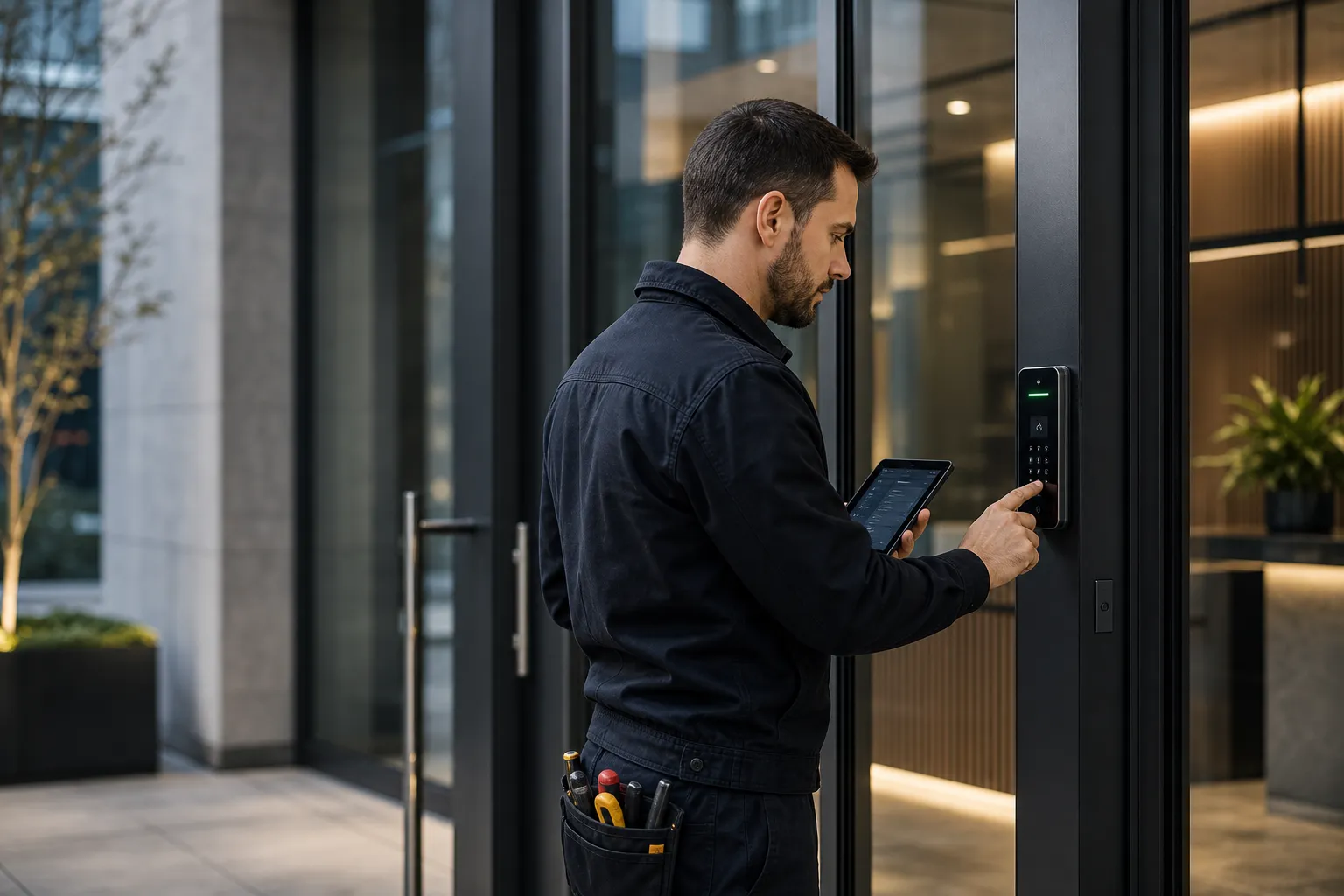
Biometrics, credentials, keypad systems, and hybrid secure-entry design for offices, industrial sites, campuses, and mixed-use properties.

Hierarchical key systems for campuses, offices, mixed-use buildings, and secure properties that need cleaner control over physical access.
Use the local coverage panel to confirm whether this category fits the property, nearby communities, and the kind of service path you need.
Commercial work is most effective when secure-entry design follows the actual operating model of the property. That means understanding who moves where, who needs temporary privileges, and where failure creates real business disruption.
Owners and facility teams rarely struggle because one lock is missing. They struggle because access rules, tenant turnover, vendor entry, and opening reliability have drifted apart. The right commercial page should help a visitor understand whether the problem is mostly mechanical, mostly digital, or a mix of both.
Some properties need commercial access control systems so permissions, schedules, and audit trails become easier to manage. Others are better served by commercial master key planning because the immediate issue is copy control, hierarchy, and cleaner mechanical access. When a failure is urgent, the path may begin with emergency commercial locksmith service and only later move into a larger upgrade.
Commercial requests in South Florida are usually local and practical. Owners and operators want to know whether the company works nearby, understands occupied buildings, and can support the next phase after the first fix. The Parkland locksmith coverage page helps confirm nearby routing while this hub helps identify the right service path.
If the scope touches multiple doors, users, or entry rules at once, this category is usually the right place to start before requesting a quote or a broader audit.
If you need a locksmith near Parkland, gate repair in northwest Broward, or secure-entry help near Boca Raton, this page outlines the nearby communities, ZIP codes, and service routes we support most often across this part of South Florida.
33067, 33076, 33073, 33071, 33428
Coconut Creek, Deerfield Beach, Lighthouse Point, West Boca
"They upgraded our entire commercial campus to keyless access and kept the rollout calm, clean, and on schedule."
"Their gate repair team arrived within the promised window and rebuilt the operator without disrupting residents."
"The audit turned into a practical roadmap, not a sales pitch. We knew exactly what to fix first."
Commercial security questions usually come from teams balancing staffing, turnover, tenant experience, and operational control. These answers explain how we scope the category, where the service lines split, and which next step usually makes the most sense.
Yes. Many clients start with one critical site, then extend standards and hardware strategy to additional locations over time.
No. We support mechanical, digital, and hybrid strategies depending on security goals, turnover, and budget.
No. We work with single offices, mixed-use properties, gated communities, and larger enterprise facilities.
Yes. Many of the strongest outcomes come from combining immediate door or key issues with a larger operating plan instead of treating each opening as a separate problem.
Start with a security audit, an emergency dispatch call, or a planning conversation and we’ll route the scope from there.