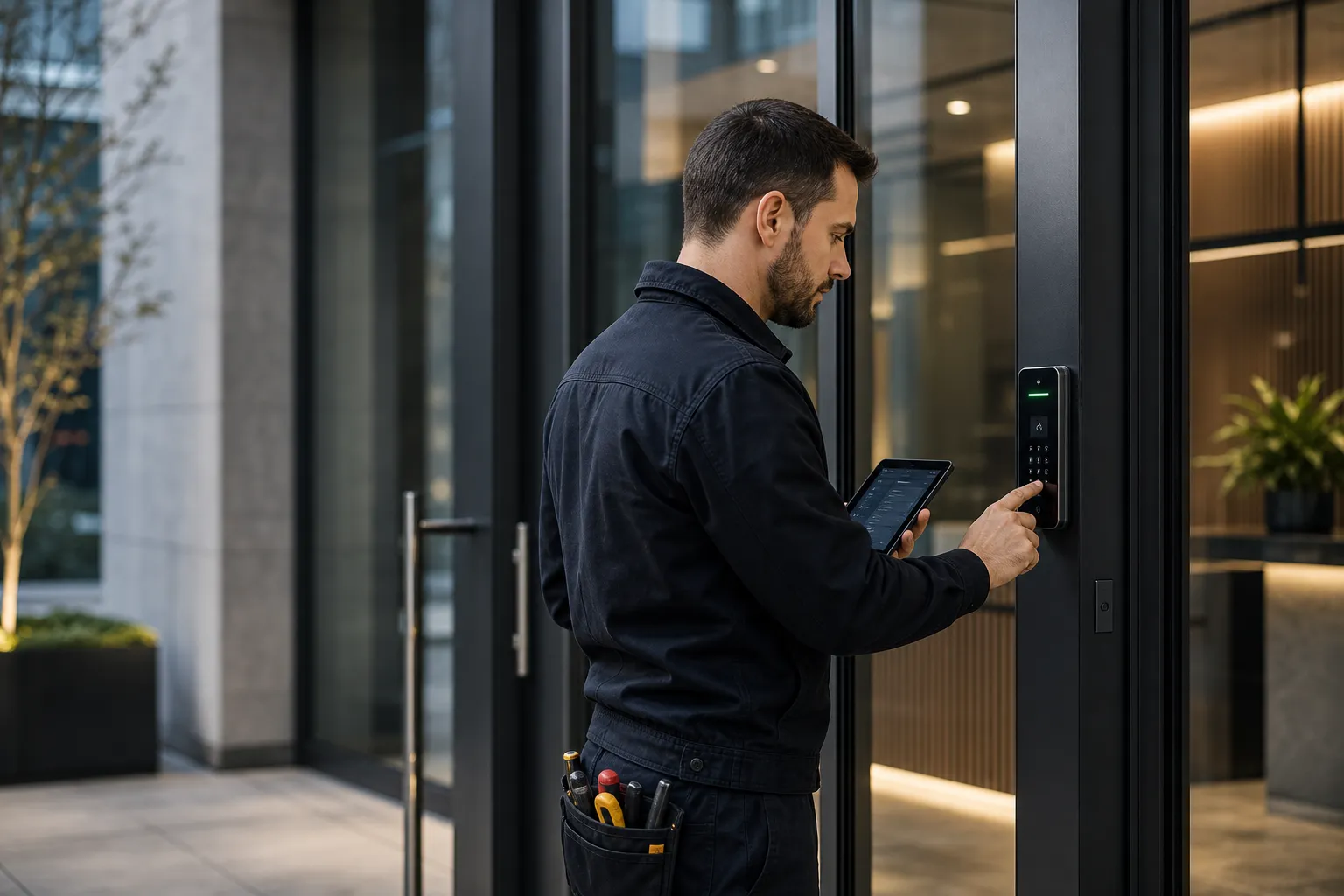
Why Friction Is The First Warning Sign
Most South Florida access control problems do not begin with a dramatic system failure. They begin with smaller signs that the property is no longer operating the way the current setup was designed to support. A door gets propped open because staff traffic has changed. A manager keeps asking for one more credential exception. A back entry becomes more active than the main lobby, but the hardware rules never catch up. Those moments create noise before they create a crisis, and that is exactly why an audit is valuable.
At Florida Premier, we treat those daily patterns as operational clues. The real question is not just whether a reader powers on or whether a lock still functions. The question is whether the opening, credential rules, and user flow still match the property’s current reality. On a mixed-use campus, a healthcare office, or a multi-tenant commercial building, the answer changes over time. If the access policy does not change with it, the system begins to drift.
What We Review During An Audit
An access control audit should give owners and managers a clearer picture of where friction is coming from and what should happen next. That means the review has to go beyond the panel and the reader list. We look at how people enter, where deliveries happen, which openings are being bypassed, and whether the mechanical hardware around the system still supports the electronic layer.
That kind of review often surfaces connected issues such as:
- credentials being reused without clear role boundaries
- door hardware that no longer closes or latches consistently
- openings that have become higher-traffic than originally planned
- gaps between after-hours policy and real staff movement
- emergency overrides or vendor access paths that are too loose
A strong audit also helps determine whether the property needs direct work on a specific service page such as commercial access control systems, whether a broader key hierarchy conversation belongs in the master key planning guide, or whether the local dispatch and trust context on the Parkland locksmith coverage page is the better next step.
Why South Florida Properties Need Local Context
Local context matters because access systems do not live in a vacuum. In South Florida, properties often deal with weather exposure, mixed indoor and outdoor circulation, seasonal occupancy shifts, vendor turnover, and perimeter points that behave differently than enclosed office entries. A clean audit process needs to account for those conditions. A recommendation that ignores real traffic patterns, gate use, exterior exposure, or regional property habits will usually create more friction instead of less.
That is also why local coverage pages and service pages should work together. A property owner may know the symptom but not the solution. They may start with a nearby coverage page, then realize the problem belongs in a more specific service lane. Keeping those routes connected makes the next step feel more obvious once the issue is clear.
Turning Audit Findings Into Action
The value of an audit is not the checklist. The value is the sequence that comes out of it. Some properties need a targeted service call and a few rule changes. Others need phased updates across doors, credentials, policies, and related secure-entry systems. The audit creates the handoff between uncertainty and execution.
That sequence should answer practical questions. Which openings matter most right now? Which issues create the most repeated friction for staff, tenants, or residents? Which fixes belong in the first phase, and which ones can wait until the broader secure-entry roadmap is clearer? When those questions are answered well, owners arrive with more trust and a much clearer sense of the right next step.
If your property is seeing recurring badge complaints, bypass behavior, or door issues that seem to point to a wider system problem, Florida Premier can help translate those signals into a focused South Florida review and a cleaner action plan.